
LEXICO
Welcome to the Lexico Project, an initiative dedicated to addressing the complex interpretations in relation to climate change and the rush on natural resources. This project explores how varied definitions and terminologies—rooted in diverse knowledge systems and local languages—fuel miscommunication in political and scientific dialogues. These challenges are further intensified by the interplay of ideological and power dynamics that influence which concepts and interpretations gain legitimacy.
The Lexico Project offers an accessible, online lexicon of essential terms from both Northern and Southern perspectives, shedding light on the nuanced differences in understanding of concepts. Each concept is presented through concise explanations, case studies, and visual illustrations, making the content engaging and informative for a broad audience. Our initiative fosters collaborative efforts among researchers worldwide, contributing to a diverse range of insights.
The project is coordinated by An Ansoms and Yanaëlle Ntwa.

Agroforestery
Agroforestry is a practice that long predates its recent con-ceptualization and formal recognition as a scientific disci-pline. it is the practice of combining trees or other ligneous plants with crops and/or livestock on the same plot of land. the goal is to increase agricultural, environmental, and eco-nomic benefits. Agroforestry reflects the way things are done in a given area, as well as the way people, plants, and animals relate to each other.

Anthropocene
the term “Anthropocene” refers to the significant impact of human activities on the earth, affecting everything from climate to biodiversity. this controversial concept has spread from the natural sciences to the social sciences, raising political, cultural and ethical issues. Although it sheds light on the pressures that globalisation places on ecosystems, it has nevertheless been criticised for glossing over historical inequalities and power relations. this has led to the emergence of alternative concepts, such as the capitalocene and the plantationocene.

Biocultural Diversity
The concept of biocultural diversity examines the interde-pendence of biological and cultural diversity, emphasizing their co-evolution as part of complex socio-ecological sys-tems. Despite its potential for integrating conservation with cultural values, it faces three conceptual confusions: defining the scale of biocultural interactions, recognizing the heteroge-neity of biocultural relationships, and navigating its political uses.

BORDER
We can look at borders from a great variety of geographical, socio-economic and cultural angles. In this text, we focus on geographical borders, and we see that they can mean different things.

Citizenship
Citizenship creates a link between an individual and a community living in the same region and governed by the same laws. It also refers to political, social, and ethical practices that focus on the common good. For example, eco-citizenship refers to citizens’ commitment to the environment. However, interpretations and practices of eco-citizenship vary. They range from support for the green economy, to challenging the systems responsible for environmental degradation, to a radical paradigm shift that reasserts knowledge and worldviews that have been discarded by modernity.

Climate Change – Conflict Nexus
A widely held narrative among policymakers and the media suggests that climate change depletes resources, intensifies competition over land and water, and drives migration, ulti- mately straining resources and sparking conflicts elsewhere. however, the academic debate on whether and how climate change contributes to violent conflict remains unsettled.

Climate Finance
Climate finance is widely understood as financial flows supporting climate mitigation and adaptation efforts. Yet, this definition masks significant debates.
Climate Security
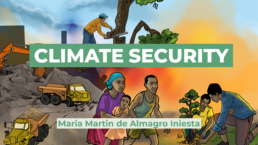
Climate security examines the links between climate change and its effects on peace and security. While climate change does not directly cause conflict, there is consensus that it exacerbates vulnerabilities in conflict-affected areas, and that violent conflict further intensifies climate impacts. However, the securitization of climate change raises questions about whose security is prioritized, reflecting differing global priorities between development and security strategies.

COMMONS
The commons’ refers to shared resources and can include public lands, water bodies, cultural assets, and even digi- tal spaces. It can also refer to forms of knowledge that are held collectively rather than privately.

Ecological Transitions
The concept of ecological transitions refers to radical shifts in the organisation of human societies aimed at safeguarding non-renewable natural resources and maintaining the environmental conditions necessary for human life on earth. However, the literature does not sufficiently clarify which type of sustainability should be driving these transitions.

Ecosystem
An ecosystem includes all living things, such as humans, plants, animals, and microorganisms, along with the non-liv-ing parts of their environment that they interact with this interaction between living and non-living components is what forms an ecosystem.

Environment
Environment is a complex term to define because it has multiple meanings that vary across disciplines, cultures, and individuals.
Most definitions refer to the relationship between humans and their environment. However, this relationship
is open to different interpretations

EXTRACTIVISM
The concept of extractivism, which originated in political ecology and decolonial studies, refers to a model of development
based on the large-scale and intensive extraction of natural resources, often exported with minimal processing. For its
proponents, extractivism is seen as inevitable and linked to the world’s growing demand for raw materials.

Food Security
The concept of food security has evolved over time to incorporate different aspects, making it multidimensional. deriving from Malthusian ideas about the imbalance between population growth and available resources, food security has become a global issue. Initially focused on production, the concept now encompasses access, use, and stability.

Forest
The forest is often imagined as a wooded area, sometimes with or without birds and animals. However, the significance of forests extends beyond the visual experience. this per-ception is greatly influenced by cultural, economic, political, social and scientific factors. this contribution outlines the various meanings that have developed around the concept of forest.
Green Growth
Green growth is a development model that aims to reduce energy and raw material consumption. Stressing the need to do more than simply secure supplies of non-renewable resources, green growth involves transforming production and consumption processes in order to preserve or restore the regulatory functions of natural capital.

Habitat
The concept of habitat encompasses ecological, social, and cultural factors. It varies across different geographical and climatic contexts, particularly in Africa. A vital space for species, habitat is influenced by natural and human factors. More recently, climate change has also become a key influence. Lake Kivu is a prime example of this diversity: a natural space, a communication route, a fishing reserve, and a source of energy, but it is also a high-risk area. The changing uses and perceptions of the lake reveal the tensions between economic exploitation and the needs of local communities.

Loss and Damage
Loss and damage as a concept, refers to the harm caused by anthropogenic climate change that cannot be prevented through mitigation or adaptation. It also designates an emergent field of climate policy addressing these negative impacts. Loss and damage can result from sudden climate-re-lated disasters as from more slowly unfolding consequences of global warming. The debates over how to address loss and damage remain contentious, reflecting tensions between climate justice approaches and technocratic market-based approaches.

Nature
Broadly speaking, the term “nature” refers to all the living (plants, animals) and non-living (minerals, water, fire) physical elements that exist on Earth. Other views consider these physical elements to be part of a larger system, such as an ecosystem, or biodiversity.
Nature Rights
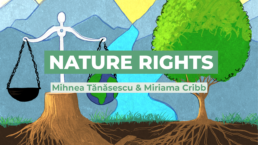
Giving rights to natural entities rivers, mountains, or entire landscapes has gained traction worldwide. Traditionally, Western legal systems treat nature as property, not as a legal person capable of defending its interests or claiming damages. Under new frameworks, some jurisdictions grant positive rights to nature, such as the right to maintain evolutionary processes or to be restored when harmed. Others confer full legal personality on natural features. These innovations have sparked vigorous academic debate and are increasingly accepted in mainstream discourse.

Political Ecology
The concept of political ecology has been used to promote environmental justice as well as to understand environmental issues. It has emerged as both a field of research and a space for interdisciplinary dialogue, providing an essential framework for analyzing the interactions between humans and nature, with a particular emphasis on the political dimensions of environmental decisions.
Resilience
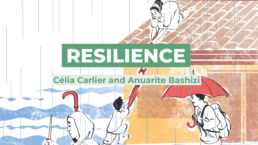
The concept of resilience refers to an individual’s or community’s ability to overcome a crisis or shock, adapt, and recover despite difficulties. However, amid all the talk about “showing resilience,” especially in political rhetoric, some have come to view it primarily as a means of justifying and maintaining a neoliberal model of social organization. Another, more nuanced approach views resilience as a fabricated process shaped by power dynamics and relationships betweendifferent actors.

SOCIAL PROTECTION
The role of social protection has expanded beyond poverty alleviation to address gaps between societal needs and state capabilities, particularly in the Global South. A transformative perspective emphasizes predistribution – shaping market outcomes like wages and earnings over post-damage redistribution.

TERRITORY
The concept of territory always begins with the concept of space. But beyond space, territory is ultimately the result of how actors take ownership of a given space, with their own. vision of themselves and their history.