

Loss and Damage
Loss and Damage
Loss and damage as a concept, refers to the harm caused by anthropogenic climate change that cannot be prevented through mitigation or adaptation. It also designates an emergent field of climate policy addressing these negative impacts. Loss and damage can result from sudden climate related disasters as from more slowly unfolding consequences of global warming. The field of climate policy distinguishes between economic loss and damage and non-economic loss and damage. The debates over how to address loss and damage remain contentious, reflecting tensions between climate justice approaches and technocratic market-based approaches.
Biocultural Diversity
Biocultural Diversity
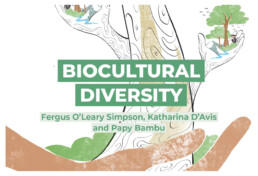
The concept of biocultural diversity examines the interde-pendence of biological and cultural diversity, emphasizing their co-evolution as part of complex socio-ecological sys-tems. Despite its potential for integrating conservation with cultural values, it faces three conceptual confusions: defining the scale of biocultural interactions, recognizing the heteroge-neity of biocultural relationships, and navigating its political uses. We explore these tensions through a case study of the yangambi Biosphere reserve in the Democratic republic of congo, where local communities’ cultural ties to their ances-tral lands within the reserve interact with broader structural circumstances. this case highlights the dynamic, contested nature of biocultural interactions and their implications for conservation.
Climate Change - Conflict Nexus
Climate Change - Conflict Nexus
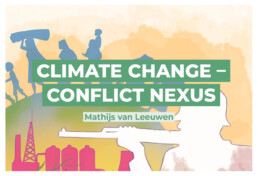
A widely held narrative among policymakers and the media suggests that climate change depletes resources, intensifies competition over land and water, and drives migration, ulti- mately straining resources and sparking conflicts elsewhere. however, the academic debate on whether and how climate change contributes to violent conflict remains unsettled. this contribution explores evolving perspectives in this discus- sion, particularly the argument that climate change does not directly cause violent conflict but rather interacts with other conflict-driving factors, such as state capacity and contested resource and climate governance. it also examines the political implications of framing conflicts as climate-driven and the broader impact of instability on climate resilience.
Ecological Transitions
Ecological Transitions
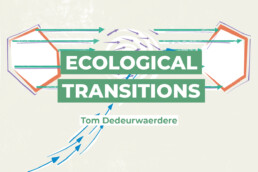
The concept of ecological transitions refers to radical shifts in the organisation of human societies aimed at safeguard-ing non-renewable natural resources and maintaining the environmental conditions necessary for human life on earth. However, the literature does not sufficiently clarify which type of sustainability should be driving these transitions. Paradigms vary significantly depending on factors such as income levels, access to technological innovations, gender and class, resulting in divergent societal recommendations.
Ecosystem
Ecosystem
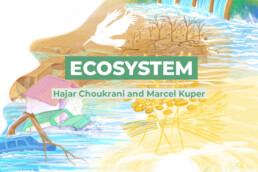
An ecosystem includes all living things, such as humans, plants, animals, and microorganisms, along with the non-liv-ing parts of their environment that they interact with this interaction between living and non-living components is what forms an ecosystem. The ecosystem approach refers to studying how these parts are connected and work together as an integrated system. It can be applied to understanding ecosystems of any size, whether at the planetary, regional, or local level. Adopting an ecosystem approach is considered a way to manage natural resources sustainably for the future.
Climate Finance
Climate Finance
Climate finance is widely understood as financial flows supporting climate mitigation and adaptation efforts. Yet, this definition masks significant debates. Key ambiguities regarding its sources, measurement criteria, beneficiaries, and decision-making authority, expose deep ideological and political divergences in the global response to climate change. Climate finance raises critical questions about the respective roles of the public and private sectors in addressing climate challenges and their implications for justice, equity, and impact. the centralised allocation of climate finance can also conflict with local communities’ interests and principles of inclusivity, transparency and ownership.
COMMONS
Commons
“The commons” refers to shared resources and can include public lands, water bodies, cultural assets, and even digi- tal spaces. It can also refer to forms of knowledge that are held collectively rather than privately. Highlighted by Garrett Hardin in his seminal work ‘Tragedy of the Commons,’ the concept underscores the risk of over-exploitation by indi- viduals prioritizing their self-interests. However, research on common property regimes demonstrates that communities can, under certain conditions, develop governance structures to effectively manage shared resources. Yet, this research often struggles with global commons, such as the climate, and has faced criticism for its insufficient recognition of the roles that culture, history, and power play in collective gov- ernance challenges.
TERRITORY
Territory
The concept of territory always begins with the concept of space. But beyond space, territory is ultimately the result of how actors take ownership of a given space, with their own vision of themselves and their history. As such, territory is not just a space, but more importantly, a social creation. While some people see territory as something to be exploited, dis-possessed, and replaced, others see it as their ‘home’, some-thing that connects a space to their roots, culture, and sense of being.
BORDER
Border
We can look at borders from a great variety of geographical, socio-economic and cultural angles. In this text, we focus on geographical borders, and we see that they can mean different things. For example, a country’s border marks the end of its territory, but there are other types of borders, like those created by nature like mountains or rivers; or these where the way land is used changes. In our text we explore how borders affect control and cooperation, and how they impact upon the people living in the surrounding border- lands. We provide an example by examining how natural resources are managed in the border area between senegal and the Gambia.