

Political Ecology
Political Ecology
The concept of political ecology has been used to promote environmental justice as well as to understand environmental issues. It has emerged as both a field of research and a space for interdisciplinary dialogue, providing an essential framework for analyzing the interactions between humans and nature, with a particular emphasis on the political dimensions of environmental decisions. Nevertheless, political ecology has experienced — and continues to experience — numerous transformations, most notably the rise of decolonial political ecology. This political ecology not only opens up debate on systems of environmental knowledge production, but also addresses environmental justice issues for formerly colonized populations.
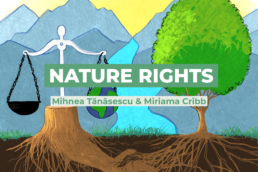
Nature Rights
Nature Rights
Giving rights to natural entities rivers, mountains, or entire landscapes has gained traction worldwide. Traditionally, Western legal systems treat nature as property, not as a legal person capable of defending its interests or claiming damages. Under new frameworks, some jurisdictions grant positive rights to nature, such as the right to maintain evolutionary processes or to be restored when harmed. Others confer full legal personality on natural features. These innovations have sparked vigorous academic debate and are increasingly accepted in mainstream discourse. This text explores the foundational concepts of nature’s rights and the challenges that emerge in specific cultural and linguistic contexts.