

EXTRACTIVISM
Extractivism
The concept of extractivism, which originated in political ecology and decolonial studies, refers to a model of development based on the large-scale and intensive extraction of natural resources, often exported with minimal processing. For its proponents, extractivism is seen as inevitable and linked to the world’s growing demand for raw materials.
Critics, however, emphasize its major socio-economic impacts, such as the forced displacement of entire communities and severe environmental degradation in a context of asymmetrical globalization. Nevertheless, numerous ethnographic studies highlight the importance of clarifying this all-encompassing concept, to better understand the contradictions and heterogeneous dynamics of extractivism at the local level.
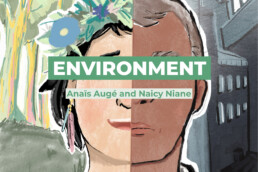
Environment
Environment
Environment is a complex term to define because it has multiple meanings that vary across disciplines, cultures, and individuals. Most definitions refer to the relationship between humans and their environment. However, this relationship is open to different interpretations.
Are humans and their environment interconnected and interdependent, or are they separated by a hierarchical relationship?
These divergences are reflected in debates and political orientations on environmental and climate issues. Ecofeminism and decolonial ecology also draw attention to the political and social issues that affect how the environment is perceived.

Nature
Nature
Broadly speaking, the term “nature” refers to all the living (plants, animals) and non-living (minerals, water, fire) physical elements that exist on Earth. Other views consider these physical elements to be part of a larger system, such as an ecosystem, or biodiversity. The broadest interpretations associate nature with a cosmological dimension of harmony and wisdom.

Citizenship
Citizenship
Citizenship creates a link between an individual and a community living in the same region and governed by the same laws. It also refers to political, social, and ethical practices that focus on the common good. For example, eco-citizenship refers to citizens’ commitment to the environment. However, interpretations and practices of eco-citizenship vary. They range from support for the green economy, to challenging the systems responsible for environmental degradation, to a radical paradigm shift that reasserts knowledge and worldviews that have been discarded by modernity.